
Taking care of your skin is more than just a beauty trend—it is an important part of maintaining overall health. Your skin is the body’s largest organ and acts as a protective barrier against pollution, bacteria, and environmental damage. A consistent skincare routine can help keep your skin balanced, prevent common issues like acne or dryness, and slow down visible signs of aging.
Many people feel overwhelmed by the number of products available today. However, effective skincare does not have to be complicated. Understanding your skin type and following a few basic steps can make a big difference in maintaining healthy, glowing skin.
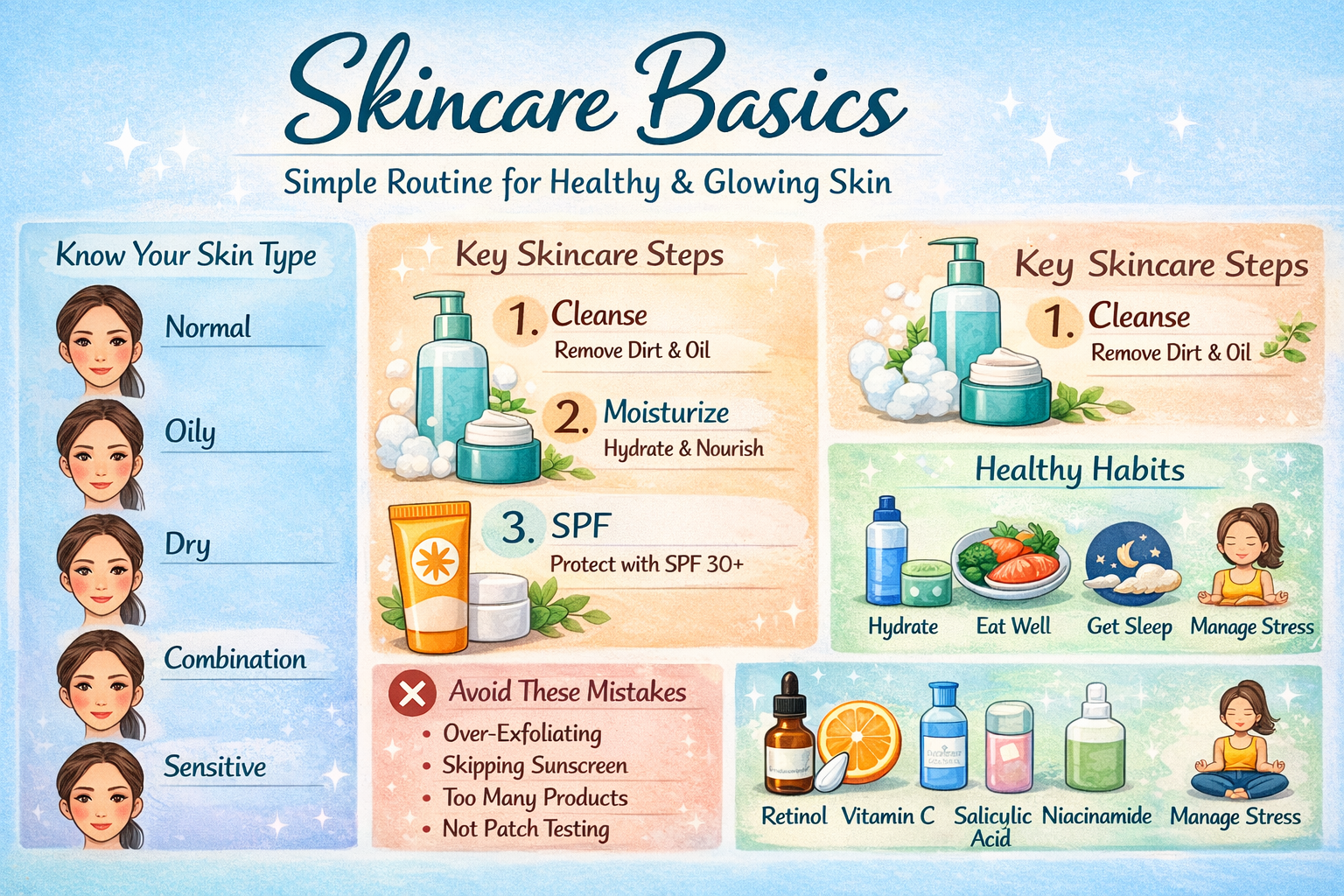
Understanding Your Skin Type
Before choosing skincare products, it is important to know your skin type. Using products designed for your specific skin needs can improve results and reduce the risk of irritation.
Common skin types include:
- Normal Skin
Normal skin is balanced—not too oily and not too dry. People with normal skin usually have small pores and rarely experience breakouts. - Oily Skin
Oily skin produces excess sebum, which can lead to shine, enlarged pores, and acne. Lightweight, non-comedogenic products work best for this skin type. - Dry Skin
Dry skin lacks moisture and may feel tight, rough, or flaky. Hydrating ingredients such as hyaluronic acid, glycerin, and ceramides can help restore moisture. - Combination Skin
Combination skin has both oily and dry areas, typically with oiliness in the T-zone (forehead, nose, and chin) and dryness on the cheeks. - Sensitive Skin
Sensitive skin can easily react to products or environmental factors. It may become red, itchy, or irritated when exposed to certain ingredients.
Knowing your skin type helps you choose products that support your skin rather than cause imbalance.
The Essential Steps in a Skincare Routine
A good skincare routine usually includes a few key steps. Consistency matters more than the number of products you use.
1. Cleansing
Cleansing is the foundation of every skincare routine. It removes dirt, oil, makeup, and pollutants that accumulate on the skin throughout the day.
Dermatologists often recommend washing your face twice daily—once in the morning and once before bedtime. People with oily or acne-prone skin may benefit from gel or foaming cleansers, while those with dry or sensitive skin may prefer cream-based or hydrating cleansers.
Proper cleansing prevents clogged pores and prepares the skin for the next steps in your routine.
2. Moisturizing
Moisturizers help maintain the skin’s natural barrier and prevent water loss. Even people with oily skin need moisturizers because dehydration can cause the skin to produce even more oil.
Look for ingredients such as:
- Hyaluronic acid for hydration
- Ceramides for strengthening the skin barrier
- Glycerin for moisture retention
Applying moisturizer immediately after cleansing can help lock in hydration and keep the skin soft and smooth.
3. Sun Protection
One of the most important steps in skincare is protecting your skin from the sun. Ultraviolet (UV) radiation can cause premature aging, wrinkles, dark spots, and increase the risk of skin cancer.
According to the Centers for Disease Control and Prevention (CDC) and the U.S. Food and Drug Administration (FDA), using a broad-spectrum sunscreen with SPF 30 or higher can significantly reduce sun damage.
Sunscreen should be applied every morning—even on cloudy days—and reapplied if you spend extended time outdoors.
Additional Skincare Ingredients to Know
Many skincare products contain active ingredients designed to target specific concerns. Understanding these ingredients can help you make better choices.
- Retinoids (Retinol and Tretinoin)
Retinoids are vitamin A derivatives that promote skin cell turnover. They are commonly used for acne treatment, improving skin texture, and reducing fine lines. - Vitamin C
Vitamin C is an antioxidant that helps brighten skin, reduce dark spots, and protect against environmental damage. - Salicylic Acid
Salicylic acid is a beta hydroxy acid (BHA) often used to treat acne. It penetrates pores and helps remove excess oil and dead skin cells. - Niacinamide
Niacinamide (vitamin B3) supports the skin barrier, reduces redness, and may help minimize the appearance of pores.
Using products with these ingredients should be done gradually to avoid irritation, especially if you have sensitive skin.
Lifestyle Factors That Affect Skin Health
Skincare products are only part of the equation. Your daily habits also influence the health of your skin.
- Hydration
Drinking enough water helps maintain overall skin hydration and supports normal bodily functions. - Balanced Diet
Foods rich in antioxidants, vitamins, and healthy fats can support skin health. Fruits, vegetables, nuts, and fish are often recommended for maintaining healthy skin. - Sleep
Adequate sleep allows the body to repair itself, including the skin. Lack of sleep may contribute to dull skin, dark circles, and increased stress hormones. - Stress Management
High stress levels can trigger breakouts or worsen existing skin conditions such as acne or eczema.
Avoiding Common Skincare Mistakes
Many people unintentionally damage their skin by overusing products or combining ingredients incorrectly.
Common mistakes include:
- Using too many active ingredients at once
- Over-exfoliating the skin
- Skipping sunscreen
- Changing products too frequently
- Not patch-testing new skincare products
Keeping a simple and consistent routine often leads to better long-term results.
Final Thoughts
Healthy skin does not require a complicated routine or expensive products. The key steps—cleansing, moisturizing, and sun protection—form the foundation of effective skincare. Once these basics are in place, targeted ingredients can be added to address specific concerns such as acne, dryness, or signs of aging.
Consistency, patience, and understanding your skin’s needs are the most important factors for achieving and maintaining healthy skin over time. By combining good skincare habits with a balanced lifestyle, you can support your skin’s natural function and keep it looking its best for years to come.



Add comment