
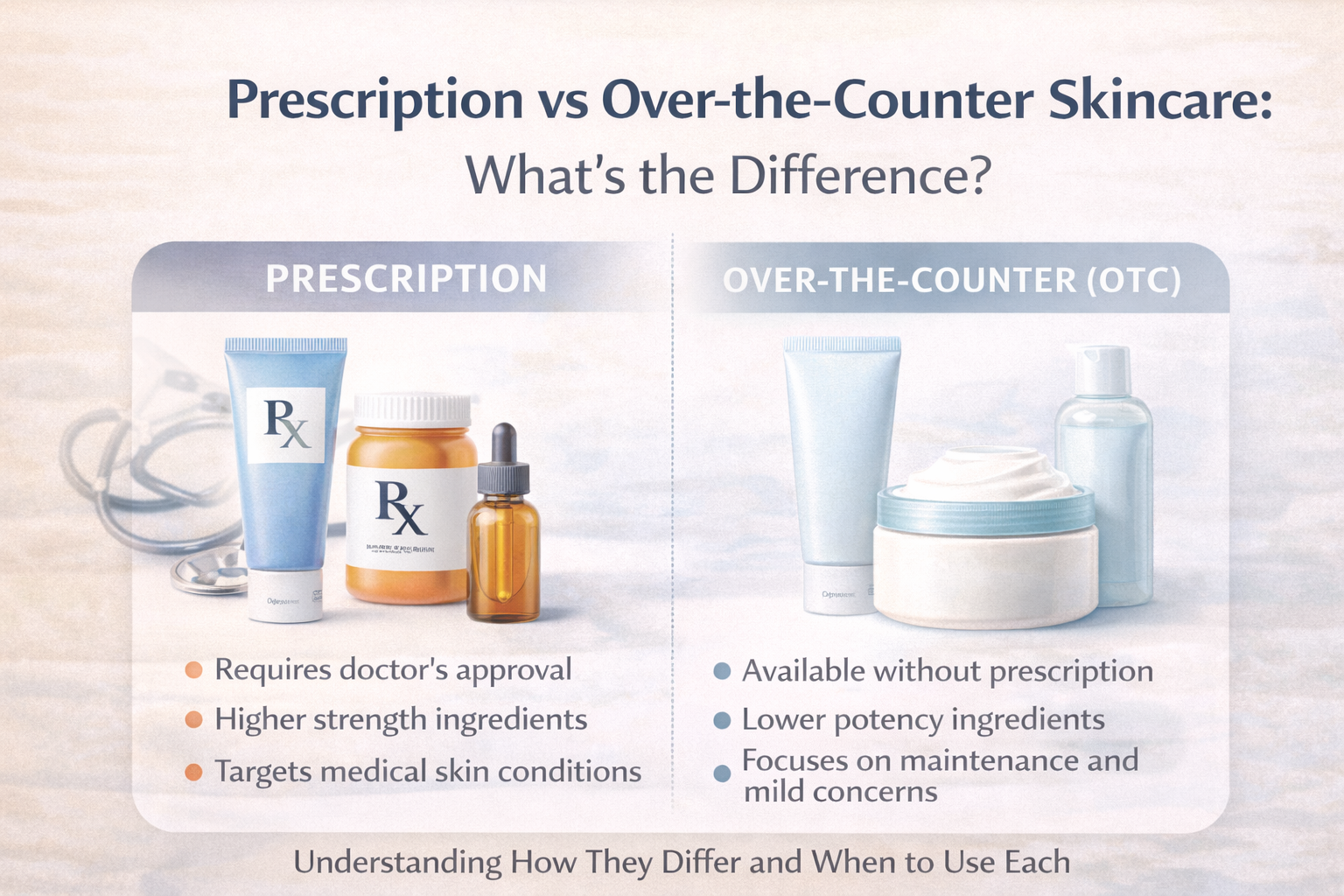
The skincare market offers countless products promising clearer, smoother, and younger-looking skin. However, one important distinction many people overlook is the difference between prescription skincare and over-the-counter (OTC) skincare. Understanding how these two categories differ can help you choose the right treatment for your specific skin concerns.
Both prescription and OTC skincare products have their place in an effective routine. The key lies in knowing when each type is appropriate and how they work.
What Is Over-the-Counter Skincare?
Over-the-counter skincare products are widely available without a medical prescription. They can be purchased from pharmacies, beauty retailers, or online stores and typically contain lower concentrations of active ingredients.
These products are designed to address common skin concerns such as:
- Mild acne
- Dryness and dehydration
- Early signs of aging
- Uneven skin tone
- Dull skin
OTC skincare focuses mainly on maintaining skin health, improving hydration, and preventing minor skin issues.
Common ingredients found in over-the-counter skincare include:
- Retinol
- Salicylic acid
- Niacinamide
- Hyaluronic acid
- Vitamin C
Because these ingredients are present in lower strengths, they are generally safe for daily use by most people.
What Is Prescription Skincare?
Prescription skincare products are stronger, medically regulated treatments that require authorization from a qualified healthcare professional. These formulations contain higher concentrations of active ingredients designed to treat more persistent or severe skin conditions.
Prescription treatments are commonly used for:
- Moderate to severe acne
- Hyperpigmentation and melasma
- Rosacea
- Advanced signs of aging
- Chronic inflammatory skin conditions
Examples of prescription-strength ingredients include:
- Tretinoin (a potent retinoid)
- Hydroquinone for pigmentation
- Topical antibiotics
- Azelaic acid at higher concentrations
Because these medications are stronger, they may cause side effects if used incorrectly, which is why professional guidance is recommended.
Key Differences Between Prescription and OTC Skincare
Understanding the core differences between these two categories can help you decide which option suits your needs.
1. Strength of Active Ingredients
The biggest difference lies in ingredient potency. Prescription skincare contains higher concentrations of active compounds, which allows them to work more aggressively on skin issues.
OTC products, on the other hand, are formulated to be milder and safer for general use.
2. Availability
OTC skincare is easily accessible without medical approval, while prescription treatments require consultation with a healthcare professional.
3. Targeted Treatment
Prescription products are typically used for medical conditions or stubborn skin problems that do not respond to standard skincare.
OTC products are better suited for prevention, maintenance, and mild skin concerns.
4. Speed of Results
Because of their strength, prescription treatments may produce faster and more noticeable improvements compared to OTC products.
However, stronger ingredients also increase the likelihood of irritation, dryness, or peeling during the adjustment phase.
When Over-the-Counter Skincare May Be Enough
Many people can manage their skincare needs with OTC products alone. If your skin concerns are mild or preventative, over-the-counter solutions may work well.
OTC skincare is often effective for:
- Mild acne or occasional breakouts
- Early fine lines
- Dry or dehydrated skin
- Maintaining overall skin health
Consistent use of gentle cleansers, moisturizers, sunscreen, and targeted serums can produce visible improvements over time.
When Prescription Skincare May Be Necessary
Some skin conditions require stronger intervention. If over-the-counter products have not produced noticeable results after several months, prescription skincare may be worth considering.
Prescription treatments may be beneficial for:
- Persistent acne that does not respond to standard treatments
- Severe hyperpigmentation or melasma
- Deep wrinkles and photoaging
- Chronic inflammatory skin conditions
Because these treatments influence the skin at a deeper level, they often require monitoring and gradual adjustment.
Can You Combine Prescription and OTC Skincare?
Yes, many effective skincare routines combine both prescription and OTC products.
For example, a routine might include:
Morning Routine:
- Gentle cleanser
- Vitamin C serum
- Moisturizer
- Broad-spectrum sunscreen
Evening Routine:
- Cleanser
- Prescription treatment
- Hydrating moisturizer
This approach allows you to benefit from medical treatments while supporting your skin barrier with nourishing OTC products.
However, layering too many active ingredients at once can cause irritation, so simplicity is often best.
The Importance of Sun Protection
Regardless of whether you use prescription or OTC skincare, sunscreen remains one of the most important steps in any routine.
Sun exposure contributes to:
- Premature aging
- Hyperpigmentation
- Skin damage
- Reduced effectiveness of treatments
Daily use of SPF 30 or higher helps protect your skin and maintain the benefits of your skincare routine.
Safety Considerations
Because prescription products are stronger, beginners should approach them carefully.
Tips for safe use include:
- Start with small amounts
- Introduce treatments gradually
- Use moisturizer regularly
- Apply sunscreen daily
If irritation becomes severe or persistent, professional guidance is recommended.
Final Thoughts
Both prescription and over-the-counter skincare products play important roles in maintaining healthy skin. OTC products are ideal for everyday care, prevention, and mild concerns, while prescription treatments are designed to address more serious or persistent conditions.
The best skincare routine often combines elements from both categories, focusing on gentle care, targeted treatment, and long-term skin protection.
By understanding the differences between prescription and OTC skincare, you can make informed decisions that support clearer, healthier skin over time.

Add comment