
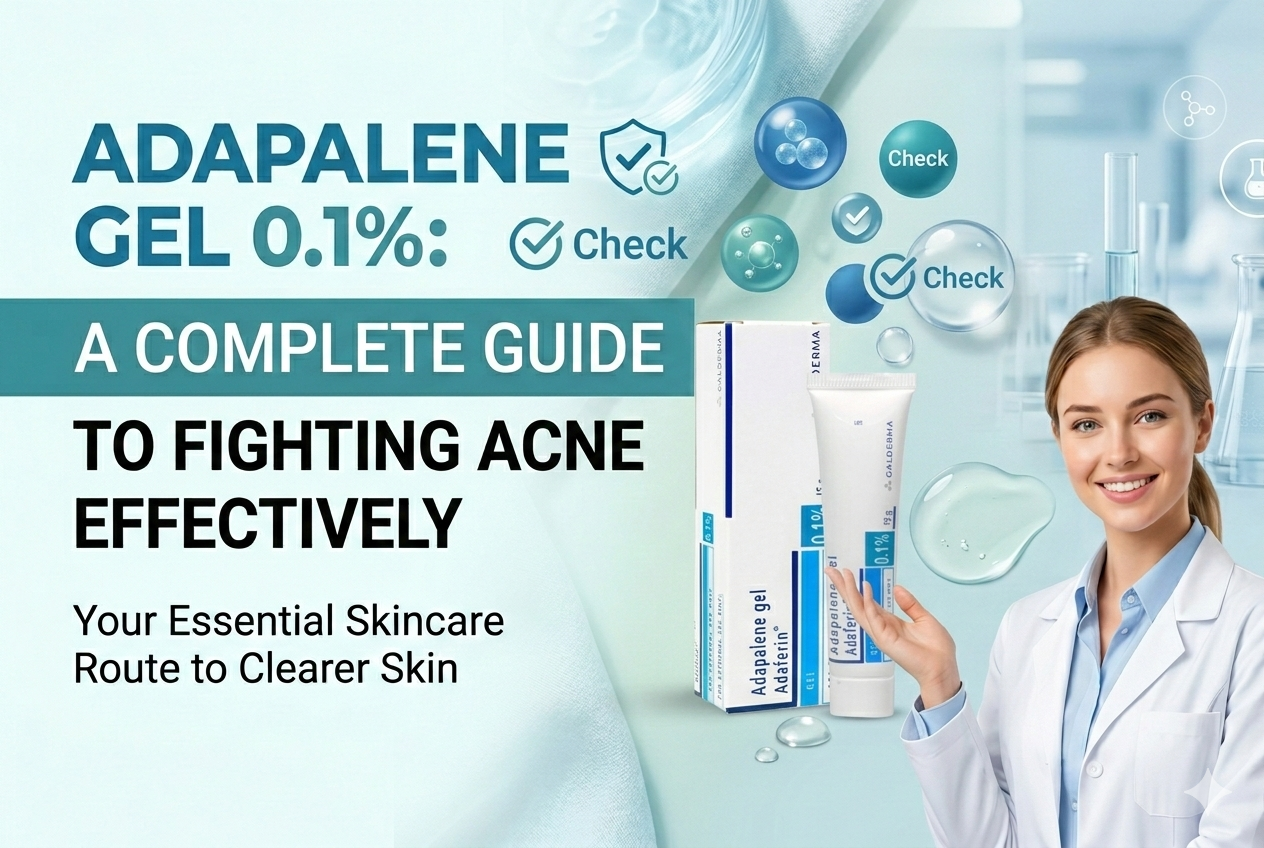
Acne is one of the most common skin concerns worldwide, affecting teenagers and adults alike. From stubborn whiteheads to painful cystic breakouts, acne can affect not just your skin but also your confidence. Fortunately, dermatology has introduced effective treatments that target acne at its root—and one of the most trusted options is Adapalene Gel 0.1%.
In this complete guide, we’ll explore how Adapalene Gel 0.1% works, its benefits, how to use it properly, and what results you can expect.
What is Adapalene Gel 0.1%?
Adapalene Gel 0.1% is a topical retinoid derived from vitamin A. It is specifically formulated to treat mild to moderate acne by targeting clogged pores, inflammation, and abnormal skin cell turnover.
Unlike older retinoids, adapalene is known for being more stable in sunlight and less irritating, making it a popular first-line acne treatment recommended by dermatologists.
How Does Adapalene Gel Work?
Adapalene works at the cellular level to:
1. Unclog Pores
It prevents dead skin cells from sticking together, reducing the formation of blocked pores (comedones).
2. Reduce Inflammation
It calms redness and swelling associated with inflammatory acne.
3. Normalize Skin Cell Turnover
Speeding up cell renewal helps prevent new breakouts from forming.
4. Prevent Future Acne
Regular use reduces recurring acne over time.
Key Benefits of Adapalene Gel 0.1%
Here’s why adapalene has become a go-to acne solution:
-
Reduces blackheads and whiteheads
-
Clears inflammatory acne
-
Prevents future breakouts
-
Improves skin texture
-
Helps fade post-acne marks over time
-
Suitable for long-term use under guidance
With consistent use, most users notice visible improvement within 6–12 weeks.
Who Should Use Adapalene Gel?
Adapalene Gel 0.1% is ideal for:
-
Teenagers and adults with mild to moderate acne
-
Individuals with oily or acne-prone skin
-
People struggling with blackheads and clogged pores
-
Those looking for a dermatologist-approved retinoid treatment
However, pregnant or breastfeeding individuals should consult a healthcare professional before using retinoids.
How to Use Adapalene Gel 0.1% Correctly
Proper application is essential for the best results and minimal irritation.
Step-by-Step Guide:
-
Wash your face with a gentle cleanser.
-
Pat skin dry completely (wait 10–15 minutes).
-
Apply a pea-sized amount to the entire face (not just on pimples).
-
Use once daily, preferably at night.
-
Follow with a non-comedogenic moisturizer.
-
Apply sunscreen during the day (SPF 30+).
What to Expect: The “Purging” Phase
When starting adapalene, some users may experience:
-
Mild redness
-
Dryness
-
Peeling
-
Temporary increase in breakouts
This phase, often called “retinoid purging,” usually lasts 2–4 weeks as clogged pores come to the surface. Staying consistent and moisturizing properly helps minimize discomfort.
Tips to Reduce Irritation
-
Start using it 2–3 times per week before moving to daily use.
-
Use a gentle moisturizer before or after application.
-
Avoid combining with harsh exfoliants or strong acne products initially.
-
Always wear sunscreen during the day.
How Long Does It Take to See Results?
-
Week 1–2: Mild dryness or purging
-
Week 4–6: Fewer new breakouts
-
Week 8–12: Noticeable improvement in skin clarity
-
Long-term: Smoother, clearer, more refined skin
Consistency is key. Skipping applications may delay results.
Adapalene vs. Other Acne Treatments
Compared with benzoyl peroxide or salicylic acid, adapalene works more deeply by regulating cell turnover. It can also be safely combined with benzoyl peroxide for enhanced acne control under professional advice.
If you’re looking for a science-backed, dermatologist-recommended acne treatment, adapalene stands out as a reliable choice.
Final Thoughts
Acne treatment requires patience and the right ingredients. Adapalene Gel 0.1% offers a proven, effective solution for clearing existing breakouts while preventing new ones from forming. With proper use and consistency, it can transform acne-prone skin into smoother, healthier-looking skin over time.
If you’re considering adding adapalene to your skincare routine, consult a healthcare provider to ensure it’s right for your skin type and concerns.

Add comment