
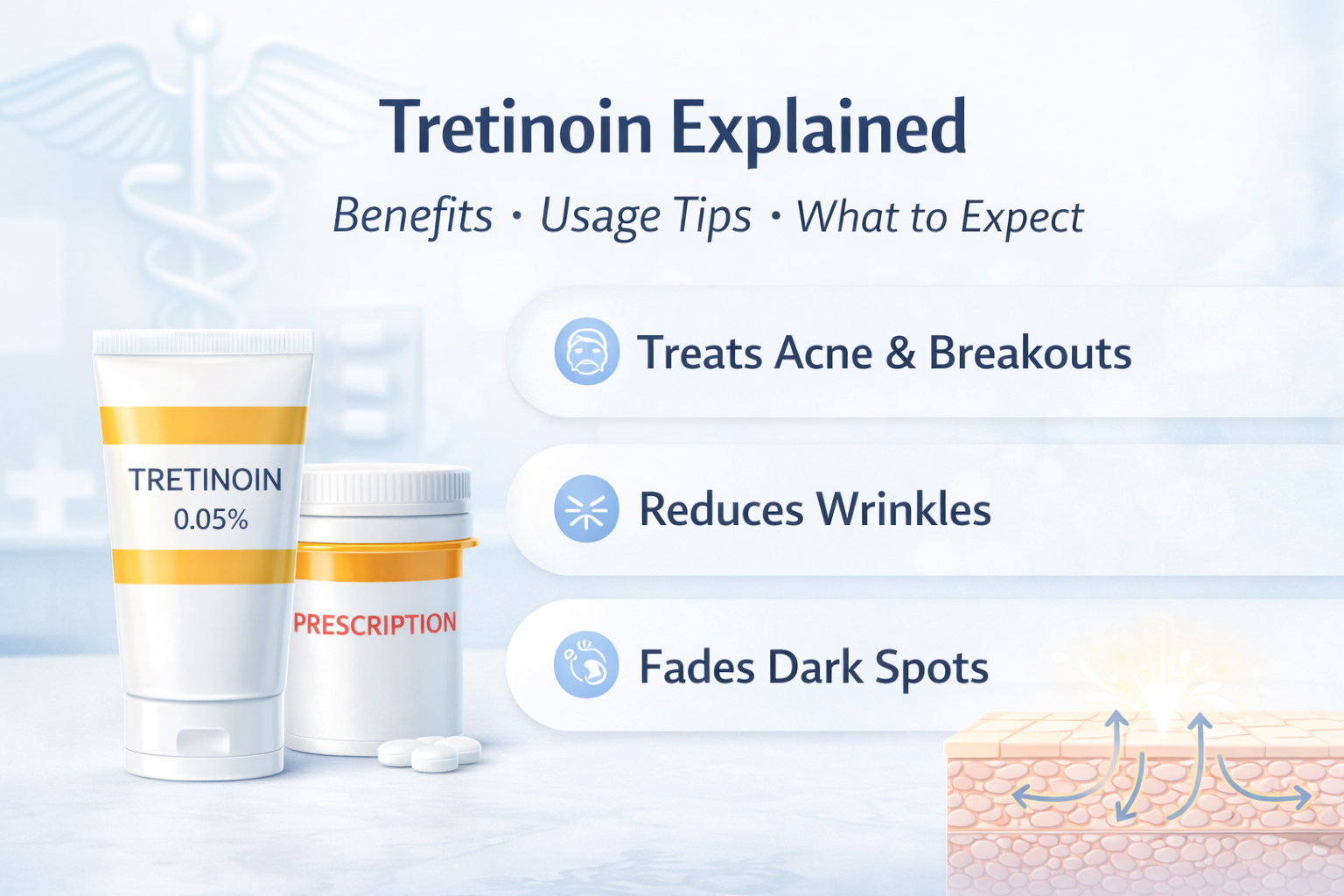
Tretinoin is widely considered one of the most effective prescription skincare ingredients available today. Whether you’re struggling with acne, fine lines, or hyperpigmentation, tretinoin has strong clinical backing for improving overall skin texture and clarity. But because it is a powerful retinoid, understanding how to use it properly is essential for achieving results while minimizing irritation.
In this guide, we’ll explain what tretinoin is, its benefits, how to use it safely, possible side effects, and what results you can realistically expect.
What Is Tretinoin?
Tretinoin is a prescription-strength derivative of vitamin A belonging to the retinoid family. It works by increasing skin cell turnover, stimulating collagen production, and preventing clogged pores.
Unlike over-the-counter retinol products, tretinoin is more potent and works directly on skin cells without requiring conversion. This makes it significantly more effective—but also more likely to cause irritation if used incorrectly.
Benefits of Tretinoin for Skin
Tretinoin is often called the “gold standard” in dermatology because it treats multiple skin concerns at once.
1. Treats Acne Effectively
Tretinoin helps unclog pores, reduce blackheads and whiteheads, and prevent new breakouts. By accelerating cell turnover, it stops dead skin cells from blocking follicles.
2. Reduces Fine Lines and Wrinkles
One of tretinoin’s most celebrated benefits is its anti-aging effect. It stimulates collagen production, improving skin elasticity and reducing the appearance of fine lines over time.
3. Improves Hyperpigmentation
Tretinoin helps fade dark spots, post-inflammatory hyperpigmentation, and uneven skin tone by promoting consistent skin renewal.
4. Enhances Skin Texture
With regular use, skin appears smoother, clearer, and more refined.
Because of its multi-functional benefits, tretinoin is commonly prescribed for both acne and anti-aging routines.
How to Use Tretinoin Safely
Starting tretinoin requires a gradual and strategic approach. Jumping into daily use can lead to unnecessary irritation.
Step 1: Start Slowly
Begin with applying a pea-sized amount 2–3 times per week at night. As your skin adjusts, you can increase frequency.
Step 2: Apply to Dry Skin
Wait 20–30 minutes after washing your face before applying tretinoin. Applying to damp skin may increase irritation.
Step 3: Use a Moisturizer
Moisturizer is essential to maintain your skin barrier. You can use the “sandwich method”:
- Apply a thin layer of moisturizer
- Apply tretinoin
- Follow with another light layer of moisturizer
Step 4: Always Wear Sunscreen
Tretinoin increases sun sensitivity. Daily SPF 30 or higher is mandatory to protect your skin and prevent pigmentation.
What to Expect During the First Weeks
Many beginners experience what is commonly known as the “retinoid adjustment phase.”
Common Side Effects:
- Redness
- Dryness
- Peeling
- Mild burning sensation
- Temporary breakouts (purging)
Purging occurs because tretinoin accelerates cell turnover, bringing underlying congestion to the surface more quickly. This phase typically lasts 2–6 weeks.
Consistency is key. Most side effects improve as your skin adapts.
How Long Does Tretinoin Take to Work?
Patience is essential when using tretinoin.
- 2–4 weeks: Skin may feel dry or irritated
- 6–8 weeks: Acne begins improving
- 3 months: Visible improvement in texture and clarity
- 6 months: Noticeable reduction in fine lines and pigmentation
Long-term use delivers the best results. Many people continue using tretinoin for years due to its proven anti-aging benefits.
Common Mistakes to Avoid
To maximize results and reduce irritation, avoid these common errors:
- Using too much product
- Applying daily from the start
- Skipping moisturizer
- Mixing with harsh exfoliants
- Ignoring sunscreen
More product does not mean faster results. A pea-sized amount is sufficient for the entire face.
Who Should Avoid Tretinoin?
While tretinoin is effective for many people, it may not be suitable for:
- Individuals with extremely sensitive skin
- Those with active eczema or rosacea flare-ups
- Pregnant or breastfeeding individuals (consult a professional first)
A professional consultation ensures safe and appropriate use.
Can Tretinoin Be Combined with Other Ingredients?
Yes, but carefully.
Safe combinations often include:
- Niacinamide
- Hyaluronic acid
- Gentle moisturizers
Avoid combining tretinoin with:
- Strong chemical peels
- High-percentage exfoliating acids
- Multiple retinoids simultaneously
Layering too many active ingredients increases the risk of irritation.
Why Tretinoin Remains the Gold Standard
Few skincare ingredients have decades of research backing their effectiveness. Tretinoin’s ability to treat acne, improve signs of aging, and refine skin texture makes it one of the most versatile prescription treatments available.
With proper usage, gradual introduction, and consistent sun protection, tretinoin can significantly transform the skin over time.
Final Thoughts
Tretinoin is a powerful, clinically proven solution for acne, fine lines, hyperpigmentation, and overall skin renewal. However, success depends on patience, proper application, and realistic expectations.
Start slowly, protect your skin barrier, and prioritize sunscreen daily. With consistent use, tretinoin can deliver clearer, smoother, and more youthful-looking skin in the long run.

Add comment