
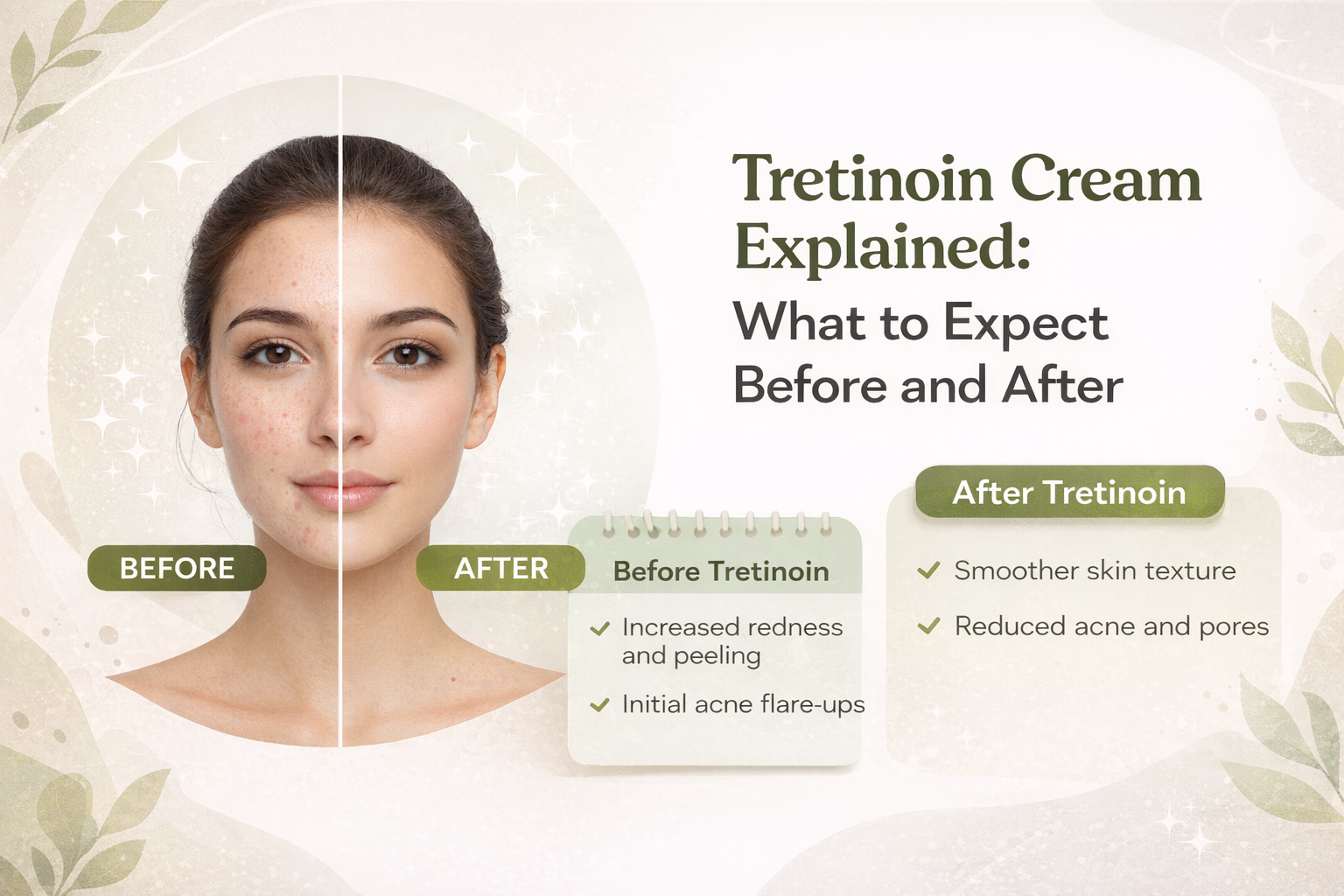
Thinking about starting tretinoin cream but not sure what the journey really looks like? You’re not alone. Whether you’re dealing with stubborn acne, early fine lines, or uneven texture, tretinoin is often recommended as one of the most effective dermatologist-backed treatments available.
But here’s the truth: tretinoin is powerful—and understanding what to expect before and after makes all the difference.
Let’s break it down in a simple, honest way.
What Is Tretinoin Cream?
Tretinoin cream is a prescription-strength retinoid derived from vitamin A. Unlike over-the-counter retinol, tretinoin works directly on your skin cells to increase cell turnover. In simple terms, it helps your skin shed old, damaged cells faster and replace them with fresh ones.
It’s commonly used for:
-
Acne and clogged pores
-
Acne scars and dark spots
-
Fine lines and wrinkles
-
Uneven skin tone
-
Rough skin texture
Because it works at a deeper level, results take time—but they’re often worth the wait.
Before Starting Tretinoin: What You Should Know
Starting tretinoin is exciting, but managing expectations is key.
1. It’s Not an Overnight Fix
If you’re hoping for instant results, you might feel discouraged. Tretinoin works gradually. Most people start seeing visible improvement around 6–12 weeks.
2. The “Adjustment Phase” Is Real
Dryness, redness, peeling, or slight irritation are very common in the beginning. This doesn’t mean it’s not working—it means your skin is adapting.
3. Purging Can Happen
Some people experience an increase in breakouts during the first few weeks. This is called purging. Since tretinoin speeds up cell turnover, clogged pores reach the surface more quickly.
4. Sunscreen Is Mandatory
Tretinoin makes your skin more sensitive to the sun. Daily broad-spectrum SPF 30+ is essential to protect your results and prevent damage.
What Happens During the First 8 Weeks?
Here’s a realistic timeline of what many users experience:
Weeks 1–2:
-
Mild dryness
-
Flaking or tightness
-
Slight redness
Weeks 3–6:
-
Possible purging (temporary breakouts)
-
Continued dryness
-
Skin may look uneven before it improves
Weeks 6–8:
-
Breakouts start reducing
-
The texture feels smoother
-
Skin begins looking clearer
Consistency is key here. Many people quit during this stage—but this is often when progress is just beginning.
Tretinoin Before and After: Realistic Results
With consistent use over 3–6 months, here’s what many people notice:
-
Fewer acne breakouts
-
Clearer pores
-
Reduced the appearance of acne scars
-
Softer fine lines
-
Brighter, more even skin tone
-
Smoother overall texture
Long-term use can also stimulate collagen production, helping improve skin firmness and reduce early signs of ageing.
The biggest “before and after” difference? Skin that looks healthier, clearer, and more refined.
How to Use Tretinoin Cream for Best Results
To minimise irritation and maximise results:
-
Use a pea-sized amount at night
-
Start 2–3 times per week, then increase gradually
-
Apply moisturiser to support your skin barrier
-
Avoid harsh exfoliants at the beginning
-
Wear sunscreen every single day
Gentle skincare works best alongside tretinoin.
Is Tretinoin Cream Worth It?
If you struggle with persistent acne, early wrinkles, or uneven texture, tretinoin can truly be a game-changer. The key is patience and consistency.
The early phase may test you—dryness and purging can feel frustrating—but the long-term results often make it one of the most rewarding skincare investments.
Final Thoughts
Tretinoin cream isn’t about quick fixes. It’s about a real, gradual skin transformation. When you understand what to expect before and after starting tretinoin, you’re more likely to stick with it—and see the results you’re hoping for.
If you stay consistent, protect your skin with SPF, and give it time, clearer and smoother skin is absolutely possible.

Add comment