
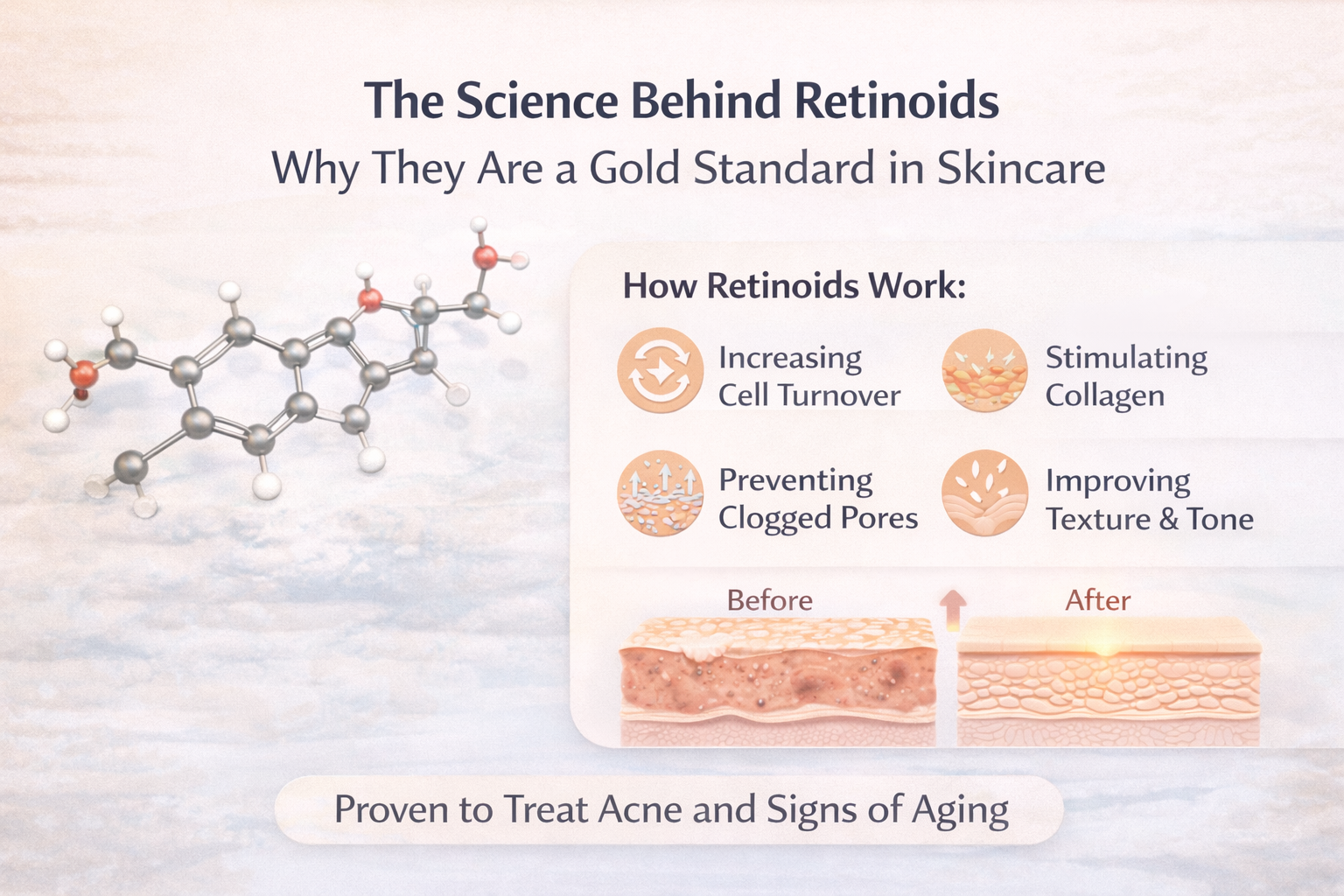
Retinoids are widely recognized as one of the most effective ingredients in modern skincare. Dermatologists often refer to them as the “gold standard” for treating multiple skin concerns, including acne, fine lines, wrinkles, and uneven skin tone. Backed by decades of scientific research, retinoids work at a cellular level to improve the structure and function of the skin.
Understanding the science behind retinoids helps explain why they are such a powerful and reliable component in many skincare routines.
What Are Retinoids?
Retinoids are a class of compounds derived from vitamin A, an essential nutrient that plays a key role in skin health. These compounds interact with skin cells to regulate growth, differentiation, and renewal.
In skincare, retinoids are commonly used in different forms, including:
- Retinol
- Retinaldehyde
- Tretinoin
- Adapalene
Each form varies in strength and how quickly it works on the skin. Some require conversion in the skin before becoming active, while others work more directly.
Despite these differences, all retinoids share a common goal: improving skin cell turnover and enhancing skin renewal.
How Retinoids Work on the Skin
One of the reasons retinoids are so effective is their ability to work at a cellular level. They interact with specific receptors in skin cells known as retinoic acid receptors, which influence how skin cells grow and behave.
Here are the primary ways retinoids benefit the skin.
1. Increasing Skin Cell Turnover
The skin naturally sheds dead cells and replaces them with new ones. However, this process can slow down with age or due to environmental damage.
Retinoids accelerate this natural process, helping the skin shed dead cells more efficiently. This reduces the buildup that can clog pores and lead to acne.
Faster cell turnover also contributes to smoother, brighter-looking skin.
2. Preventing Clogged Pores
Acne often forms when pores become blocked with excess oil and dead skin cells. Retinoids help prevent this by keeping pores clear and reducing the formation of comedones, which include blackheads and whiteheads.
Because of this ability, retinoids are commonly used in acne treatment.
3. Stimulating Collagen Production
Collagen is the structural protein responsible for maintaining skin firmness and elasticity. As people age, collagen production naturally declines, which contributes to wrinkles and sagging skin.
Retinoids stimulate collagen production within the skin. Over time, this can help reduce the appearance of fine lines and improve skin firmness.
This collagen-boosting effect is one of the reasons retinoids are widely used in anti-aging skincare.
4. Improving Skin Texture and Tone
Retinoids also help improve the overall appearance of the skin by encouraging more even cell renewal.
With consistent use, many people notice improvements such as:
- Smoother skin texture
- Reduced roughness
- Brighter complexion
- More even skin tone
These effects make retinoids beneficial for individuals dealing with dull or uneven skin.
Types of Retinoids in Skincare
There are several forms of retinoids available in skincare products, each with different levels of potency.
Retinol
Retinol is one of the most widely used retinoids in over-the-counter skincare products. It is generally milder than prescription options but still effective with consistent use.
Retinaldehyde
Retinaldehyde is slightly stronger than retinol and converts more quickly to active retinoic acid within the skin.
Tretinoin
Tretinoin is a powerful retinoid often used in dermatology for acne and anti-aging treatments. It works directly without needing conversion in the skin.
Adapalene
Adapalene is another retinoid commonly used for acne treatment. It tends to be more stable and less irritating for some users.
Why Retinoids Are Considered the Gold Standard
Retinoids have earned their reputation because they address several major skin concerns at the same time. Few skincare ingredients offer such a wide range of scientifically supported benefits.
Key advantages of retinoids include:
- Proven effectiveness for acne treatment
- Reduction of fine lines and wrinkles
- Improvement in skin texture and tone
- Long-term skin renewal and repair
Another reason they are highly regarded is the large body of clinical research supporting their use.
What to Expect When Starting Retinoids
Although retinoids are effective, they often require an adjustment period. When people first start using them, the skin may experience temporary side effects such as:
- Dryness
- Redness
- Peeling
- Increased sensitivity
This phase is sometimes called retinization, during which the skin adapts to the ingredient. These reactions usually improve with consistent use.
To reduce irritation, beginners often start with lower concentrations and gradually increase usage.
Tips for Using Retinoids Safely
Using retinoids correctly can improve results and reduce the likelihood of irritation.
Helpful tips include:
- Start with a small amount
- Apply only at night
- Use a gentle moisturizer
- Avoid combining with too many active ingredients
- Apply sunscreen daily
Because retinoids can increase sun sensitivity, protecting the skin from UV exposure is essential.
Final Thoughts
Retinoids remain one of the most powerful and scientifically supported ingredients in skincare. By increasing skin cell turnover, preventing clogged pores, stimulating collagen production, and improving overall skin texture, they provide benefits for both acne treatment and anti-aging care.
While they may require patience during the adjustment period, consistent use often leads to clearer, smoother, and healthier-looking skin. This combination of proven effectiveness and long-term benefits is exactly why retinoids continue to be considered the gold standard in skincare.
Add comment