
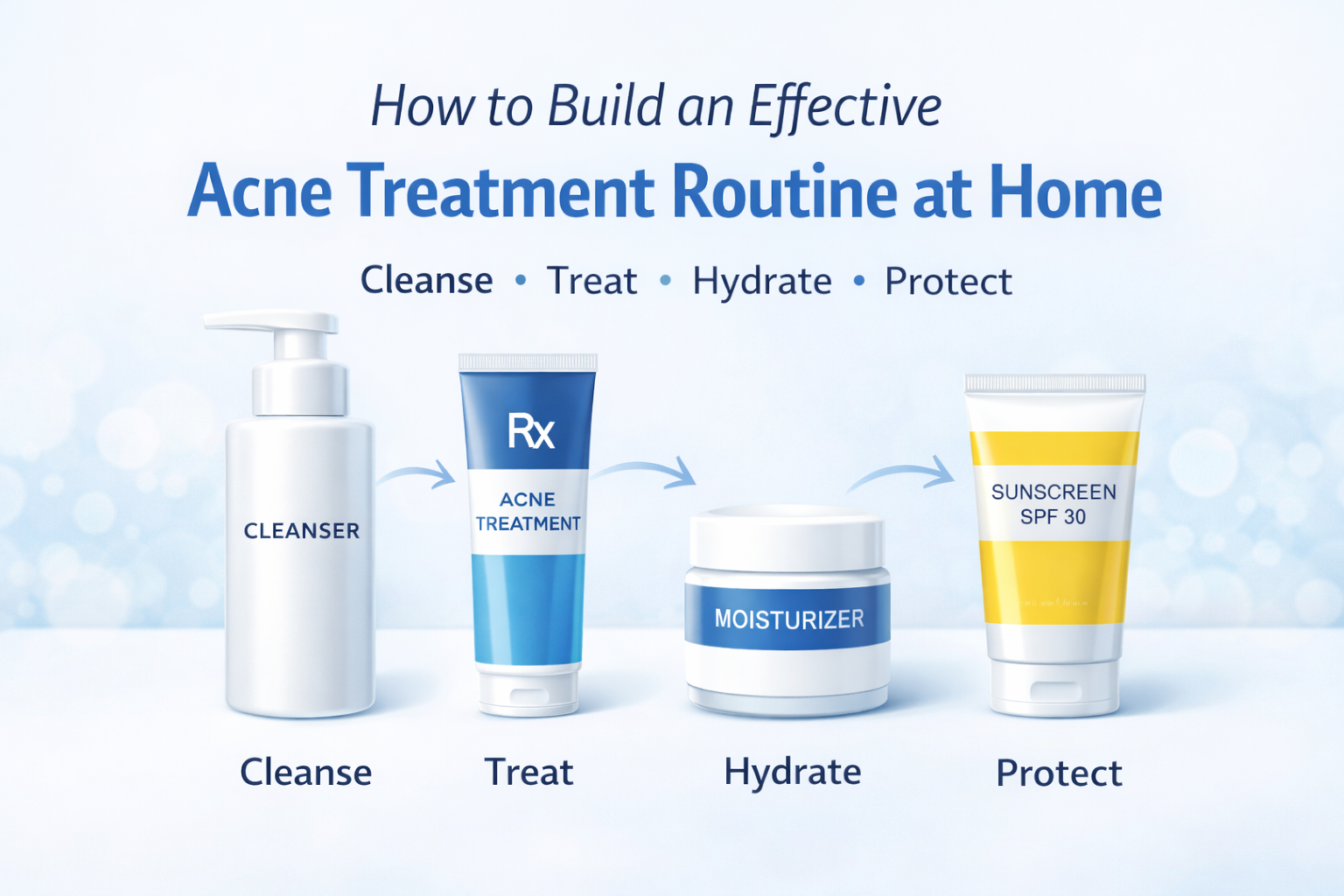
Acne is one of the most common skin concerns worldwide, affecting teenagers and adults alike. While professional treatments are available, many people can successfully manage breakouts by building an effective acne treatment routine at home. The key is understanding your skin type, choosing proven ingredients, and maintaining consistency.
In this guide, we’ll walk you through how to create a results-driven acne skincare routine using evidence-based strategies that support clearer, healthier skin.
Understanding Acne: Why It Happens
Before building a routine, it’s important to understand what causes acne. Breakouts develop when pores become clogged with excess oil (sebum), dead skin cells, and bacteria. Hormonal fluctuations, stress, diet, and improper skincare products can worsen the condition.
There are different types of acne, including:
- Whiteheads and blackheads
- Papules and pustules
- Nodules and cystic acne
An effective acne treatment routine targets oil control, bacterial growth, inflammation, and clogged pores.
Step 1: Choose a Gentle Cleanser
Cleansing is the foundation of any acne skincare routine. Use a gentle, non-comedogenic cleanser twice daily—morning and night—to remove dirt, oil, and impurities without stripping the skin barrier.
Look for ingredients like:
- Salicylic acid (helps unclog pores)
- Benzoyl peroxide (reduces acne-causing bacteria)
- Niacinamide (calms inflammation)
Avoid harsh scrubs or over-cleansing, as this can irritate the skin and trigger more oil production.
Step 2: Apply a Targeted Acne Treatment
After cleansing, apply a treatment product designed to address active breakouts and prevent future ones. Depending on your skin’s needs, you may choose:
Retinoids
Retinoids increase cell turnover, prevent clogged pores, and improve overall skin texture. They are highly effective for both inflammatory and non-inflammatory acne.
Benzoyl Peroxide
This ingredient reduces acne-causing bacteria and helps control inflammation.
Azelaic Acid
A great option for acne-prone and sensitive skin, azelaic acid reduces redness and helps fade post-acne dark spots.
Start slowly—especially with retinoids—to minimize irritation. Apply a pea-sized amount and use every other night initially.
Step 3: Moisturize Daily (Yes, Even for Oily Skin)
Many people skip moisturizer when treating acne, fearing it will worsen breakouts. However, hydration is crucial. Acne treatments can dry out the skin, and dehydration may increase oil production.
Choose:
- Oil-free moisturizers
- Gel-based or lightweight lotions
- Non-comedogenic formulas
Look for ingredients like hyaluronic acid and ceramides to maintain the skin barrier.
Step 4: Never Skip Sunscreen
Sun protection is essential in any acne treatment routine at home. Many acne-fighting ingredients increase sun sensitivity, which can lead to irritation and hyperpigmentation.
Use:
- Broad-spectrum SPF 30 or higher
- Lightweight, oil-free sunscreen
- Non-comedogenic formulations
Daily sunscreen helps prevent post-inflammatory hyperpigmentation (dark spots after acne heals).
Weekly Add-Ons for Better Results
To enhance your routine, consider these additions:
Exfoliation (1–2 Times Weekly)
Chemical exfoliants like salicylic acid or glycolic acid can remove dead skin cells and improve clogged pores. Avoid over-exfoliating, as it may damage the skin barrier.
Clay Masks
Clay masks help absorb excess oil and reduce shine.
Spot Treatments
Use targeted treatments containing benzoyl peroxide or sulfur for active pimples.
Building a Simple Acne Routine (Example)
Morning Routine:
- Gentle cleanser
- Lightweight moisturizer
- Sunscreen
Evening Routine:
- Cleanser
- Acne treatment (retinoid or targeted product)
- Moisturizer
Keep the routine simple. Adding too many products increases irritation and slows progress.
How Long Does It Take to See Results?
Consistency is crucial when building an effective acne treatment routine at home.
- 2–4 weeks: Skin adjustment phase
- 6–8 weeks: Reduced breakouts
- 3 months: Noticeable improvement in clarity
- 6 months: Significant acne control
Avoid switching products too frequently. Most acne treatments require at least 8–12 weeks to show meaningful results.
Common Mistakes That Worsen Acne
Avoid these frequent skincare mistakes:
- Over-washing the face
- Using harsh scrubs
- Skipping moisturizer
- Mixing too many active ingredients
- Popping pimples
These habits can damage the skin barrier and trigger more inflammation.
Lifestyle Tips to Support Clear Skin
While skincare is essential, lifestyle factors also play a role in acne management:
- Manage stress levels
- Get adequate sleep
- Maintain a balanced diet
- Avoid touching your face frequently
- Change pillowcases regularly
Healthy habits can complement your acne treatment routine and improve results.
When to Seek Professional Help
If acne is severe, painful, or not improving after several months of consistent home care, consider consulting a qualified professional. Prescription-strength treatments may be necessary for cystic or hormonal acne.
Final Thoughts
Building an effective acne treatment routine at home requires patience, consistency, and the right ingredients. Focus on gentle cleansing, targeted treatments, proper hydration, and daily sun protection.
Clear skin does not happen overnight, but with a structured routine and realistic expectations, you can significantly reduce breakouts and improve your skin’s overall health.

Add comment